


Montessori Phonics Cabinet With 120 Miniature Objects
Montessori Phonics Cabinet With 120 Miniature Objects
Limited-Time Promotion
Couldn't load pickup availability
- American express payment method
- Apple pay payment method
- Bancontact payment method
- Diners club payment method
- Discover payment method
- Google pay payment method
- Master payment method
- Mbway payment method
- Satispay payment method
- Shopify pay payment method
- Visa payment method
-
Ordered
- - -
Order Ready
- - -
Delivered

Montessori Phonics Cabinet With 120 Miniature Objects
FAQ
FAQ
FAQ – Frequently Asked Questions
1.When will my order ship?
Most orders are processed within 1–2 business days.
2.How long is delivery?
Standard U.S. delivery usually takes 5–12 business days. International orders may take longer.
3.How do I track my order?
Once your order ships, you will receive an email with a tracking number.
4.Can I change or cancel my order?
Orders can only be changed or canceled before they are shipped. Contact us as soon as possible if you need assistance.
5.What payment methods do you accept?
We accept major credit/debit cards, PayPal, Shop Pay, Apple Pay, and other secure checkout options (depending on availability).
6.What if the item arrived damaged?
Please email us with a photo of the damaged item within 48 hours, and we will arrange a replacement or refund.
7.What if the package is lost?
If your package is marked “delivered” but you didn’t receive it, contact us and we will help investigate with the carrier.
8.Do you ship internationally?
Yes, we ship to most countries. Shipping times vary based on destination.
Turn Letters From Something They See Into Something They Can Hold.
Open a tiny drawer. Discover a miniature object. Say its name, listen to the first sound and match it back to the letter.
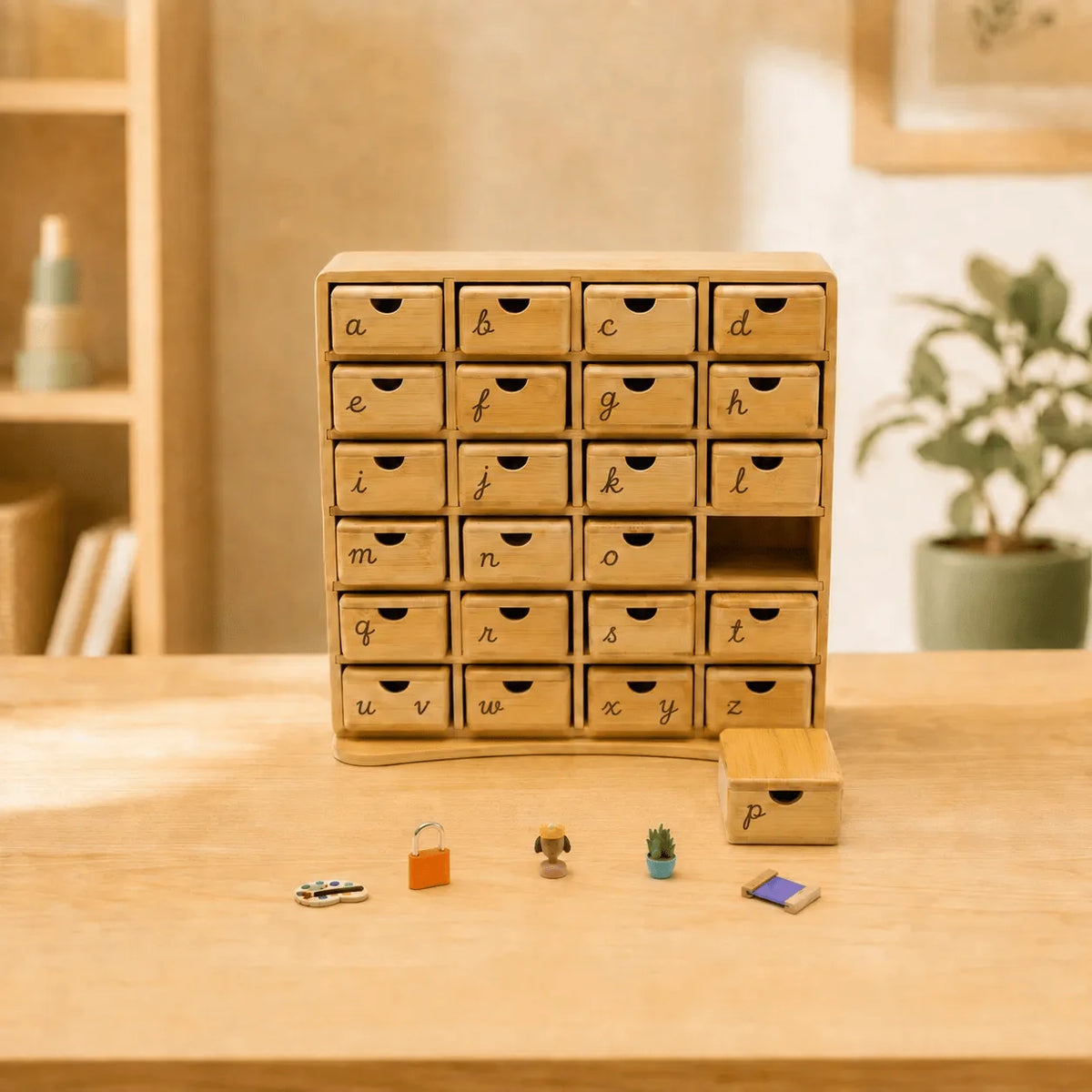
The Montessori Phonics Cabinet turns early letter-sound practice into a hands-on activity built around real objects children can pick up, name, compare, sort and explore.

Give Every Letter Something Real to Connect With.
A letter by itself can feel abstract. A tiny car, cup, camera, plant or book gives that symbol something familiar to connect to.
Children can hold an object, say its name aloud and listen for the sound at the beginning, turning phonics practice into a small act of discovery instead of another page to complete.

Connect a written letter with a familiar miniature item instead of working only from symbols on paper.
Say each object's name aloud and listen carefully to the sound that begins the word.
Pick up, examine and compare the miniature objects during guided activities.
Return the object to its letter drawer or mix several together for a sorting challenge.
120 Miniature Objects Give Phonics More Ways to Feel Like Play.
The Complete Learning Set pairs the cabinet with 120 miniature objects, creating a varied collection for sound matching, object naming, sorting and vocabulary activities.
Instead of repeating one example for every letter, the collection gives children many little objects to identify, discuss and revisit in different ways.

Learning Feels Different When Curiosity Gets to Lead the Activity.
Instead of asking a child to sit with a stack of cards, open a drawer and let the miniature object become the starting point for conversation.
Name it. Talk about it. Listen to the word. Compare it with another object and decide which letter it belongs with.

Open. Name. Listen. Match.
You don't need to turn every activity into a full lesson. Start with one drawer or just a few different sounds and build from there.

Pick one letter and discover the miniature objects connected with that sound.
Say the object's name slowly and listen for the beginning sound.
Mix several objects together and match them back to their letters.
Keep Reusing the Same Objects in New Little Games.
Today's activity can be simple letter matching. Tomorrow, mix drawers together and turn the same miniature collection into a listening or memory game.
Reusing familiar objects in different activities helps keep the learning shelf useful without constantly needing new worksheets or disposable materials.
Ask your child to find an object that begins with a chosen sound.
Combine objects from several drawers and sort them back by beginning sound.
Hide one familiar miniature and ask which object disappeared.
Choose a miniature and talk about its name, use, shape or color.
Choose a letter and search the collection for a matching beginning sound.
Place two or three objects together and listen for how their first sounds differ.
Less Searching. Less Loose-Piece Chaos. More Time for Discovery.
The letter-labeled drawers give the miniature collections a dedicated home, helping turn setup and cleanup into part of the learning routine.
The natural bamboo-style cabinet also looks warm and orderly on a homeschool shelf, learning table or classroom activity area between sessions.

Give each group of miniature objects a predictable place to return to after an activity.
Warm wood tones fit naturally into Montessori-inspired and home learning spaces.
Bring the same collection back out for matching, naming and sorting activities.
Keep materials together instead of rebuilding the activity from scattered pieces each time.
Make Short Learning Sessions Feel More Like Exploration.
Use the cabinet during home learning, homeschool routines or guided classroom activities whenever you want to move phonics away from the page and onto the table.

Turn a few minutes of letter-sound practice into a hands-on table activity.
Reuse the cabinet across phonics, vocabulary, listening and sorting lessons.
Use small groups of objects during teacher-led naming and sound-matching activities.
Choose the Letter Style That Fits Your Learning Space.
The cabinet is available with Print or Cursive lettering, letting you select the visual style that best matches the materials already used in your learning environment.
A Car Can Start With “C” — and Then Lead to So Much More.
Once an object is in a child's hand, phonics doesn't have to be the only conversation.
Talk about what the object is, what color it is, where they might see one, then return to the beginning sound and place it with the matching letter.

Make More Room for Those Little “I Know This One!” Moments.
A drawer opens. A tiny object appears. A familiar word suddenly connects with a sound and a letter.
Those small discoveries are what make hands-on learning enjoyable to revisit — whether you're guiding a lesson at home or building a Montessori-inspired learning shelf.

Everything Behind the Hands-On Phonics Experience.
Make Early Phonics Something They Can Actually Explore.
One organized cabinet. A collection of tiny familiar objects. And countless opportunities to name, listen, match and sort.
Bring phonics off the worksheet and onto the learning table with a hands-on activity designed to make letters and sounds feel more concrete.


